Fitness is a popular topic today, especially among students and young adults. Everyone wants to stay fit, look good, and feel healthy. But with so much information available online, many fitness myths have become common beliefs. These myths can mislead you and slow down your progress. In this blog, we will break down fitness myths and facts so you can make the right choices for your health.
Myth 1: “You Must Exercise Every Day to Stay Fit”
Many people believe that if they miss a day of exercise, they will lose their progress. This is not true. Rest is an important part of fitness. Your muscles need time to recover and grow stronger. Exercising every day without rest can lead to fatigue, injury, and burnout.
Fact: Aim for 3–5 workout sessions per week, and include rest days for recovery.
Myth 2: “Cardio is the Only Way to Lose Weight”
Cardio exercises like running and cycling are helpful, but they are not the only way to lose weight. Weight loss mainly depends on calories burned vs calories consumed. Strength training is equally important because it builds muscle, which increases your metabolism.
Fact: Combine cardio and strength training for effective weight loss.
Myth 3: “You Can Target Fat Loss in One Area”
Many people think doing exercises like crunches will reduce belly fat. Unfortunately, spot reduction is a myth. When you lose weight, fat decreases from the whole body, not just one area.
Fact: Full-body workouts and a healthy diet are the best way to reduce body fat.
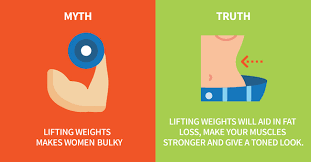
Myth 4: “Lifting Weights Makes You Bulky”
This myth is especially common among girls. Lifting weights does not automatically make you bulky. Muscle growth depends on hormones, diet, and training intensity. Strength training helps you build lean muscle, which makes your body stronger and more toned.
Fact: Weight training improves body shape, strength, and metabolism without making you bulky.
Myth 5: “More Sweat Means More Calories Burned”
Sweating is your body’s way of cooling down, not a sign of calories burned. The amount you sweat depends on temperature, humidity, and your body’s natural response.
Fact: Sweat is not a measure of workout quality. Focus on consistency and intensity.
Myth 6: “You Must Eat Protein Immediately After Workout”
Protein is important for muscle recovery, but you don’t need to rush to eat it right after exercise. Your body can use protein effectively even if you eat within a few hours after working out.
Fact: Eat balanced meals throughout the day, including protein, carbs, and healthy fats.
Myth 7: “You Need Supplements to Get Fit”
Many people believe that fitness supplements are necessary for good results. While supplements can help in certain cases, they are not essential. Most nutrients should come from natural food sources like eggs, chicken, vegetables, fruits, and grains.
Fact: Supplements are optional. A balanced diet is more important.
Myth 8: “If You Stop Exercising, Muscle Turns into Fat”
Muscle and fat are different tissues. Muscle does not turn into fat. If you stop exercising, your muscles may shrink due to inactivity, and you might gain fat if you eat more calories than you burn.
Fact: Muscle and fat are separate. Maintain activity and healthy eating.
Myth 9: “Fitness Requires Expensive Gym Membership”
Fitness does not require a gym. You can stay fit using bodyweight exercises like push-ups, squats, lunges, and planks. Outdoor activities like running, cycling, or walking are also effective.
Fact: Consistency matters more than equipment. You can exercise at home or outdoors.
Myth 10: “No Pain, No Gain”
This is one of the most dangerous fitness myths. Pain is a warning sign from your body. While a little discomfort is normal during exercise, severe pain can indicate injury.
Fact: Workouts should challenge you, not harm you. Stop if you feel sharp pain.
Final Thoughts: Fitness is Simple, Not Complicated
Fitness is not about following complicated rules or believing every online tip. The key is to focus on consistent exercise, a balanced diet, and enough rest. Don’t let myths distract you from your goals.
If you want to stay fit and healthy, remember these simple facts:
- Exercise regularly but allow rest days.
- Combine cardio and strength training.
- Eat healthy food and avoid unhealthy junk.
- Track progress with consistency, not quick fixes.
- Stay motivated and enjoy your fitness journey.
Leave a Reply